Duty of Care: WFA is the Minimum for Every SAR Responder
For many volunteer SAR teams, technical rescue and wilderness medicine have historically operated in separate lanes. Wilderness medicine is often treated as a specialty rather than a core operational competency, creating gaps in patient care when every minute matters.
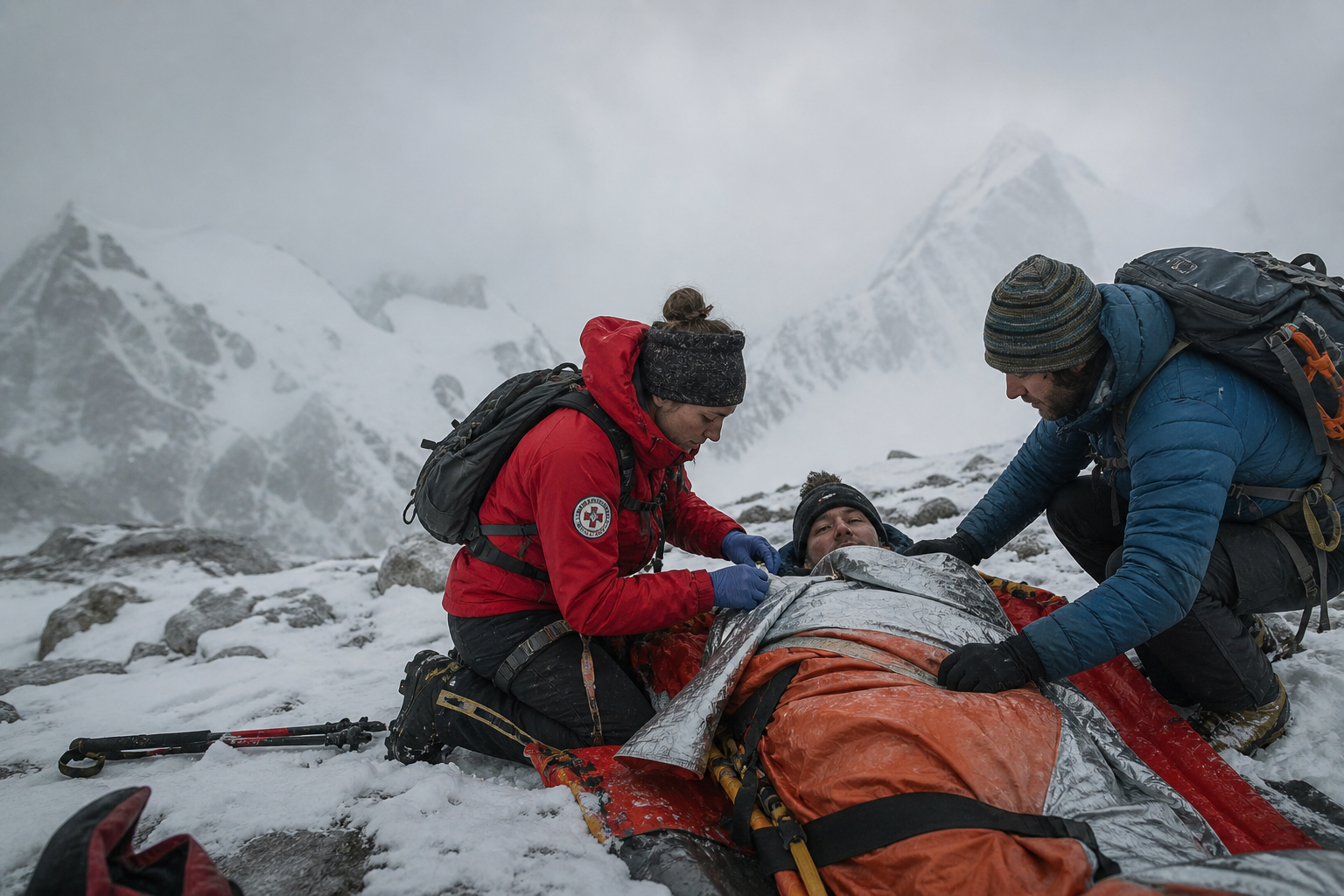
The reality is that every field-deployable SAR responder is part of the rescue AND the medical response. The moment you make contact with a subject, you become responsible for their care. If you are a field-deployable SAR responder, you are a medical provider. Whether you are an EMT, a Wilderness First Responder, or a volunteer with minimal medical training, you may be the only person available within miles to recognize life threats, provide immediate interventions, and stabilize a patient until higher levels of care arrive. Medical care is not separate from the rescue mission, it is an essential component of it.
Defining the Duty of Care
Contact with a subject in the backcountry carries both ethical and professional responsibilities. This responsibility reflects the duty of care inherent in wilderness rescue operations. If a technical SAR team arrived at a cliff-side rescue without the ability to build a basic anchor system, placing the subject at risk, most would recognize this as a significant gap in operational preparedness and a failure to meet the expected standard of care. Why, then, do we hold medical readiness to a different standard?
Just as a faulty technical rope system can place the life of a subject at risk, deploying responders who lack the training necessary to care for critically ill or injured patients carries equally significant consequences. If a SAR responder is first on scene to a subject with life-threatening hemorrhage and lacks the knowledge or skills to control the bleeding, the outcome may be fatal. SAR missions routinely involve locating and caring for critically ill or injured individuals in remote environments where advanced medical care may be hours away. Preparing responders to provide basic wilderness medical care is not an additional responsibility beyond the scope of SAR; it is fundamental to the mission itself.
SAR organizations routinely recognize that training standards must reflect the realities of the operational environment. This is why the Mountain Rescue Association (MRA) accreditation is widely recognized as the benchmark for technical mountain rescue teams because it addresses the unique challenges of conducting rescues in complex austere environments, including glaciers, exposed mountain terrain, and remote desert landscapes. Teams do not use the National Fire Protection Association (NFPA) rope certifications as the benchmark because these certifications do not fully encompass the competencies required for wilderness rescue operations.
Yet, many SAR organizations continue to rely on urban CPR and standard first aid certifications as the baseline for medical preparedness, despite these programs being developed primarily for in-city environments. They do not adequately prepare responders for the realities of delivering patient care in remote settings where definitive care may be delayed and they are responsible. If SAR teams recognize that technical rescue standards must reflect the operational environment, medical training standards should be held to the same expectation. Wilderness First Aid (WFA) provides a wilderness-specific foundation for patient care and should be considered the minimum standard for field-deployable SAR personnel.
Establishing Wilderness First Aid (WFA) as the minimum standard for field deployment does not imply that every SAR responder should be trained to the level of a Wilderness First Responder (WFR) or Paramedic. Rather, it recognizes the need for a practical and attainable level of medical preparedness that reflects the realities of volunteer SAR operations. Lack of such preparedness could even be considered a liability.
Historical Barriers That Shaped Today's Reality
The separation between Search and Rescue and wilderness medicine was not a deliberate decision made by SAR teams. Rather, it was often a practical reality shaped by longstanding barriers to training access.
Historically, wilderness medicine education required significant financial investment, extensive travel, and multiple consecutive days away from work and family obligations. For volunteer responders, many of whom already dedicate substantial personal time and resources to serving their communities, these barriers made wilderness medical training difficult to obtain. As a result, many SAR organizations focused their limited training resources on technical rescue competencies while relying on standard first aid and CPR certifications to address medical preparedness.
This reality is understandable. SAR responders are frequently the true first responders to wilderness medical emergencies, yet they have historically had the least access to wilderness-specific medical education tailored to their operational environment.
Fortunately, advances in educational delivery have made wilderness medicine training more accessible to the teams that need it most. Blended learning models that combine online education with locally delivered practical training provide SAR organizations with a more affordable, accessible, and sustainable approach to medical preparedness.
However, while a standard Wilderness First Aid course provides an appropriate foundation for outdoor recreationalists and community members who may encounter an emergency, SAR responders fulfill a fundamentally different role. Traditional WFA programs are designed to help individuals recognize emergencies, provide initial stabilization, and activate emergency medical services. In these situations, the responder's role largely concludes once higher levels of care arrive.
For SAR responders, however, they are the rescue resource arriving to provide assistance in environments where definitive care may be delayed. They may serve as the initial care provider, a litter attendant during prolonged evacuations, or an assistant to higher-level medical personnel during a mission. For this reason, Base Medical's SAR Wilderness Medicine program places additional emphasis on patient assessment, ongoing monitoring, communication, evacuation considerations, and continuity of patient care within the operational realities of search and rescue.
This understanding is central to Base Medical's SAR Wilderness Medicine programs. Recognizing the financial, geographic, and time constraints faced by volunteer responders, our programs were intentionally developed to bring wilderness medicine training directly to SAR teams through in-house practical training supported by online learning. By reducing traditional barriers to education, SAR teams can build and maintain a sustainable culture of medical preparedness that reflects the realities of modern wilderness rescue operations.
A Call to Action for SAR Team Leaders
As a Team Leader or Training Officer, you have the ability to influence the medical readiness of your organization.
Establish a minimum standard: Consider Wilderness First Aid as a requirement for field deployment.
Integrate medical training into routine operations: Include patient care scenarios within navigation exercises, technical rescue training, and mock missions.
Create sustainable training systems: building an educational model that makes wilderness medicine training affordable, accessible, and maintainable over time.
Professionalism in SAR is not defined by compensation or certification level. It is reflected in the standards we establish and the preparedness we maintain for the communities we serve.
SAR responders are often the true first responders to wilderness medical emergencies. Ensuring they possess the foundational medical competencies necessary to fulfill that responsibility is not an aspiration, it is a professional obligation.
Ready to strengthen your team's medical preparedness? Learn more about Base Medical's turn-key SAR Wilderness Medicine program designed to bring affordable and sustainable wilderness medicine training directly to SAR teams. Train your team for as low as $65 per person.